Legend of the Northern Blade: Best Manhwa for Character Development?
A murim revenge epic where the quiet prince of a fallen sect grows into a true sword master without losing his humanity.
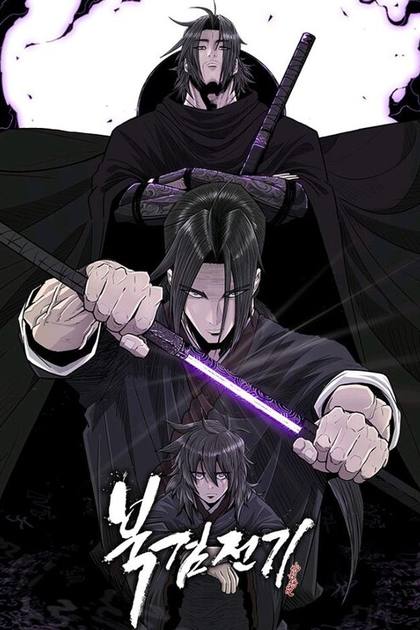
Legend of the Northern Blade is a murim manhwa that earns its reputation through character growth rather than power creep. Jin Mu-won is the son of the murdered leader of the Northern Sea Sword Sect, and when the story opens he is a forgotten outcast with a forbidden technique. What follows is a slow, deliberate rise built on discipline and grief. For readers browsing manga character analysis lists, Mu-won is the model case: a protagonist who becomes formidable because of who he is, not because the plot hands him a new form.
The reason it tops so many best manhwa recommendations is consistency. The art frames sword fights as choreography instead of noise, and the supporting cast actually changes across the arc instead of orbiting the hero. The world of the four sects and the hidden blades behind the sect fall gives the revenge plot real weight. If you want a martial arts story where the emotional payoff matches the action, this one rarely misses, and the translation community has kept it readable for years.
Compared with faster system manhwa, Legend of the Northern Blade asks for patience early, but the investment pays off as the sect legacy and Mu-won philosophy take shape. Manga with best character development review threads almost always land here because the arc is the point, not the level-up. It is a completed-feeling journey with a clear spine, which makes it an easy pick for readers tired of infinite towers. Recommend it to anyone who wants a swordsman story with a brain, a heart, and a blade that means something when it moves.
Editorial Discussion
Legend of the Northern Blade splits opinion mostly on pacing. Devotees call it the best character-driven murim manhwa available, pointing to Mu-won restraint and the way secondary figures earn their arcs instead of filling space. Impatient readers admit the opening is slow and the political scenes pile up, but they still finish because the sword work and the emotional throughline hold. The consensus is that it rewards the patient reader more than almost any competitor, and that the development is the draw, not the spectacle. For a first recommendation it works best as a binge, where the early calm reads as setup rather than stagnation.
Related reading
- Is Gachiakuta the Best Dark Fantasy Manga of 2026 Worth Reading?
- SSS-Class Suicide Hunter: Best Action Manhwa With a Good Story?
- Is The Breaker Eternal Force Overrated? A Honest Manhwa Review
- Is Study Group the Best Completed Manhwa With Great Pacing?
- Is Detective Conan Worth Reading? The Manga Plot Holes Debate
- Ao Ashi Review: The Most Underrated Seinen Manga to Read in 2026